
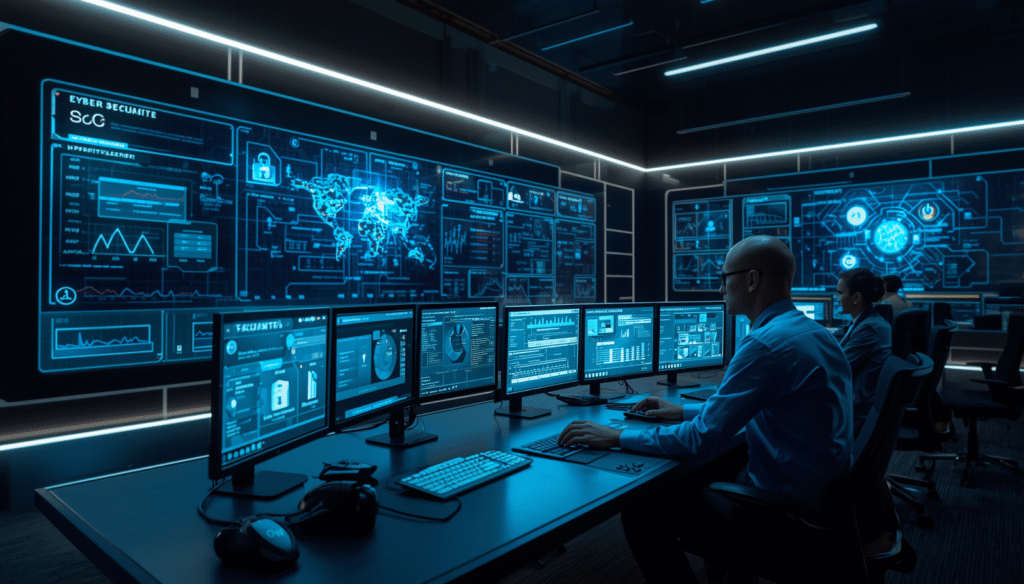
The cybersecurity landscape continues to evolve as organizations embrace digital transformation, cloud computing, and connected technologies. While these innovations create new opportunities for growth and efficiency, they also expand the attack surface available to cybercriminals. Security Operations Centers are expected to defend increasingly complex environments while responding quickly to sophisticated threats that can disrupt business operations and compromise sensitive information.
To address these challenges, organizations are building more resilient SecOps environments powered by artificial intelligence and supported by skilled cybersecurity professionals. AI enables organizations to process large volumes of security data and automate routine tasks, while human analysts provide strategic oversight and decision-making capabilities. Together, they create a security model that improves visibility, accelerates response times, and strengthens organizational resilience.
Building Resilience Through Intelligent Automation
Cybersecurity resilience requires organizations to detect, respond to, and recover from incidents effectively. Traditional security operations often struggle with limited resources and increasing workloads, making it difficult to maintain consistent performance during major incidents.
AI-powered technologies help organizations strengthen resilience by automating repetitive activities such as threat detection, log analysis, vulnerability assessment, and alert prioritization. Automated workflows improve efficiency and allow security teams to focus on high-impact activities that require human expertise.
Intelligent automation also enhances operational consistency by ensuring critical security processes are executed quickly and accurately. This capability is particularly important during large-scale incidents where rapid response can significantly reduce business impact.
The Strategic Role of Security Professionals
Despite advances in automation, cybersecurity remains a people-driven discipline. Human analysts bring critical thinking, creativity, and contextual understanding that technology alone cannot provide. They are responsible for evaluating complex incidents, developing response strategies, and ensuring that security initiatives align with business objectives.
Security professionals also contribute to threat hunting, security architecture planning, and continuous improvement efforts. Their expertise helps organizations adapt to changing threat landscapes and strengthen long-term resilience. AI supports these activities by providing insights and reducing administrative workloads, allowing analysts to focus on strategic priorities.
By combining intelligent automation with skilled professionals, organizations can build Security Operations Centers that are both efficient and resilient.
Key Benefits of a Resilient SecOps Model
- Enhanced threat visibility
- Faster incident detection and response
- Reduced operational complexity
- Improved analyst efficiency
- Better risk management
- Stronger business continuity
- Increased cyber resilience
- More effective security operations
Conclusion
Building a resilient Security Operations Center requires more than advanced technology. Organizations must combine AI-powered capabilities with experienced security professionals to create an adaptive and effective cybersecurity strategy.
As threats continue evolving, businesses that invest in AI-powered and human-driven SecOps will be better positioned to protect critical assets, maintain operational continuity, and strengthen long-term cyber resilience.